essay
how to win friends and influence engineers
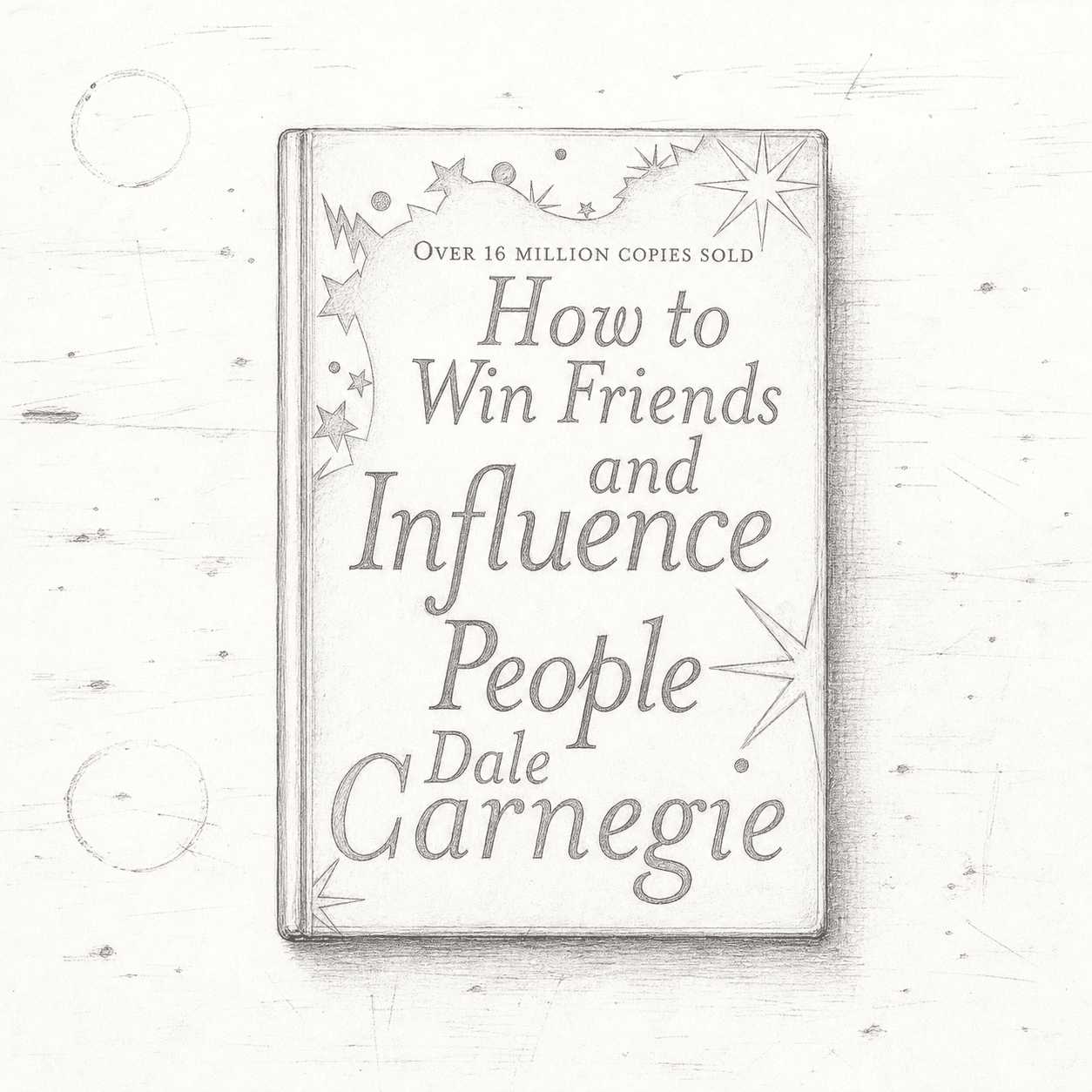
for four years i refused to read it. the title alone, How to Win Friends and Influence People, made me cringe. who reads a book like that.
i only picked it up because of the company i was keeping. i was spending my days around some of the best salespeople i'd ever met, people who moved through a room and a deal like it was choreographed, and i couldn't work out how they did it. so i started asking. more than one of them, almost sheepishly, pointed me at the same 1936 book with the ridiculous title.
one of them laughed when i asked. turned out he'd trained as a practitioner years earlier and used to teach Carnegie's material for a living. these principles weren't a curiosity to him, they were the operating system he'd run his whole career on. nobody had ever mentioned it to me, and i think that's the point. the people who use it best rarely bring it up.
so i read it, on a packed District line, with the cover twisted right round so nobody could see what i was holding. three chapters in i caught my reflection in the window with my hand over my mouth, because i was reading the manual every impressive person i knew had already memorised.
the book's even better than its reputation. i'm not going to summarise it, you can do that in an afternoon. what took me longer was working out how it lands in a technical world, because the people i care about most, engineers, tend to receive these principles in their own dialect. so think of this as a translation, not a correction.
Carnegie says remember names. with an engineer, that same instinct shows up as remembering technical decisions. quote back to someone the position they argued in last quarter's architecture review and you've paid them a truer compliment than any amount of praise.
Carnegie says take a genuine interest in the other person. with an engineer, that lands as reading their code before you ask for their time. ten minutes on a recent pull request, one specific question, and you've shown more interest than an hour of small talk ever could.
Carnegie says make the other person feel important. with an engineer, the currency is public attribution. saying this was Sarah's approach from the design review travels further than three rounds of compliments, because it costs you something and it puts her name in the room.
the smile, translated
Carnegie spends pages on the warmth of a smile, and even that holds, it just wears different clothes. in a technical culture, warmth reads as usefulness. so be useful in a way nobody asked for. send the paper they were hunting for. point them at the library that would've saved you a fortnight. the goodwill's the same, only the form is local.
the through-line, the thing Carnegie understood in 1936 and the salespeople i admired were still running on decades later, is a simple one. make the other person feel seen for the actual thing they're doing. every good relationship i've watched, in sales or in engineering, comes back to that. the only thing that changes from room to room is the currency you pay it in.
i went looking for the trick the best performers were using. it turned out to be an eighty-year-old book they were all a little shy to admit they loved. i'm not shy about it. it's the best career advice i was never given, right up until i asked.